For more than a decade, the Hotel Bossert was the building Brooklyn Heights kept waiting on.
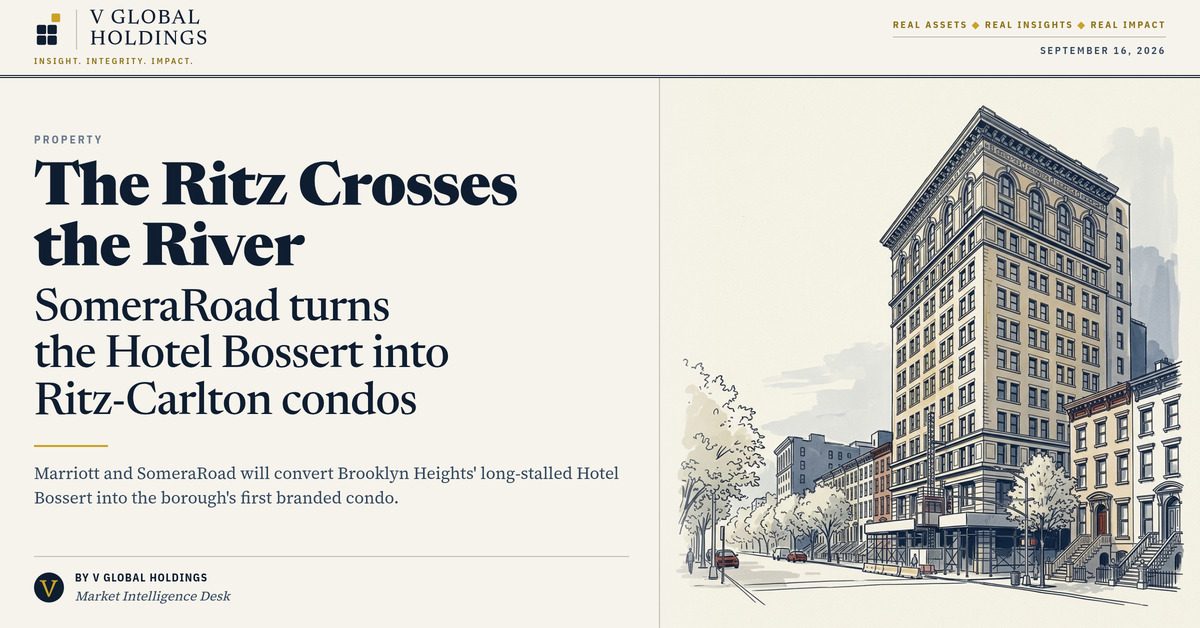
Now it has a logo on the door.
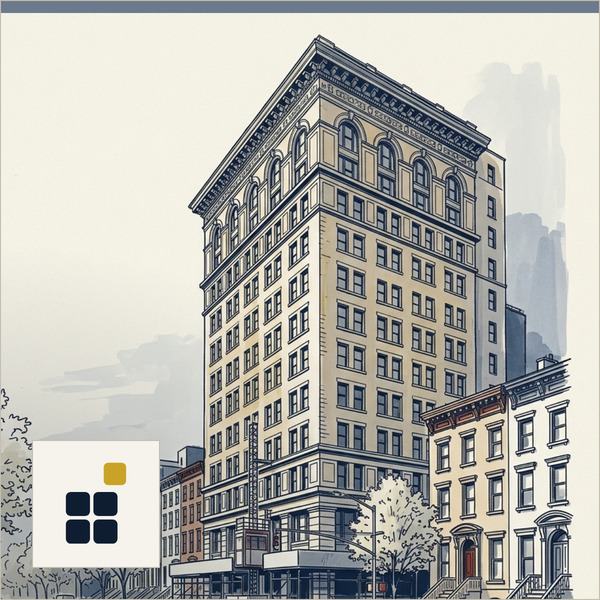
On Tuesday, Marriott International and SomeraRoad unveiled plans for The Ritz-Carlton Residences, Brooklyn Heights at the former hotel, a 14-story Renaissance Revival landmark at 98 Montague Street. The building will become luxury condos, with construction expected to start later this year. It is the first branded residence in New York to cross the East River into Brooklyn.
If you develop, lend on, broker, or value luxury residential in New York, this deal is worth unpacking. It shows how a brand can reset a distressed asset’s story, why buyers pay for the name, and what a 13-year saga tells us about capital stacks on historic buildings. Here’s what was reported, what the numbers suggest, and what I’d watch next.
The Deal at a Glance
| Item | Detail |
|---|---|
| Property | Former Hotel Bossert, 98 Montague Street, Brooklyn Heights |
| Building | 14 stories, Renaissance Revival, built 1909 |
| Developer | SomeraRoad (New York and Nashville), founded 2016 by Ian Ross |
| Brand partner | Marriott International (Ritz-Carlton) |
| Acquisition | $100 million, purchased last year from Beach Point Capital |
| Ground-floor restaurant | Danny Meyer’s Union Square Hospitality Group |
| Sales and marketing | Serhant New Development, led by the Ravi Kantha Team |
| Milestone | Ritz-Carlton’s 50th standalone residence |
Residents get private condo ownership plus Ritz-Carlton services: a 24-hour attended lobby, dedicated residential services, and access to Marriott benefits. Union Square Hospitality Group will open its first full-service Brooklyn restaurant on the ground floor.
That’s a lot of brand power stacked into one Montague Street address.
Why Branded Residences Keep Growing
This isn’t a one-off. It’s a category that has grown fast.
According to Savills, as reported by The Real Deal:
- There were 323 branded residences in 2015.
- That number reached 910 as of last year, nearly triple.
- Globally, branded residences command an average 33% premium.
- Dubai leads the pipeline, followed by Miami.
- New York ranks third, with 32 completed projects and four in the pipeline at the end of last year.
“There were just 323 branded residences in 2015, a figure that has nearly tripled to 910 as of last year, according to Savills.” — The Real Deal
TRD attributes the boom to growing wealth and a real estate surge that started during the pandemic. Developers use the brand to attract buyers and build trust. Buyers, in turn, pay extra for the name.
My read: in a market where buyers can’t fully judge build quality or future operations from a floor plan, a hotel brand lowers the perceived risk. The 33% premium is the price of that reassurance. For the developer, it’s also a marketing shortcut, because the building has a name before it has a sales gallery.
A 13-Year Road to the Ritz
The Bossert’s history is a clear example of how capital stacks break on complicated historic assets.
Here’s the timeline as TRD reported it:
- 1909: Lumber magnate Louis Bossert builds the hotel. It later becomes known as Brooklyn’s Waldorf-Astoria.
- 1983: The Jehovah’s Witnesses buy the building.
- 2013: Joseph Chetrit and David Bistricer buy it from the Jehovah’s Witnesses, promising a restoration with 78 guest rooms, a restaurant, and a rooftop bar.
- 2014: Renovations are underway.
- 2019: Chetrit buys out Bistricer and secures a $112 million loan from Cantor Commercial Real Estate Lending.
- 2020: The loan is assigned to Wells Fargo, then goes into special servicing in August as Covid hits New York.
- 2021: Chetrit defaults, per court filings. Wells Fargo starts foreclosure, claiming it’s owed more than $126 million.
- Beach Point Capital buys the note, then takes the hotel at a foreclosure auction nine months later.
- Last year: SomeraRoad buys the building from Beach Point for $100 million.
- Tuesday: Marriott and SomeraRoad announce the Ritz-Carlton Residences.
Two numbers stand out. Wells Fargo claimed more than $126 million was owed. SomeraRoad paid $100 million. My math, not reported: the building sold for at least $26 million less than the debt claimed in foreclosure. Beach Point’s own cost basis in the note wasn’t disclosed, so we can’t say what it earned.
The lesson for operators is familiar. A plan that depends on a long hotel renovation, one lender, and a smooth market has no room for a pandemic. The asset was never the problem. The capital structure and the timeline were.
Why SomeraRoad Took a Different Path
The original plan was a hotel. The new plan is condos with hotel services.
That shift matters. Branded condos let a developer sell units and return capital as sales close, instead of waiting years for a hotel to stabilize. The Ritz-Carlton name supports premium pricing. USHG gives the ground floor a destination tenant. Serhant’s new development team handles the sales.
SomeraRoad has done repositionings before. In 2022, it bought a commercial condo unit above Harry’s at 1 Hanover Square for $6 million and turned it into boutique offices. The Bossert is a much bigger bet, but the approach is the same: buy an older building with character, then give it a new use.
What I’d Watch Next
The announcement answers the “what.” Several “how” questions are still open:
- Pricing. No unit count or asking prices have been disclosed. Once they are, we can test how much of Savills’ 33% premium shows up in Brooklyn.
- Construction timing. “Later this year” is the stated start. On a 1909 building with this history, the schedule is the risk.
- Brooklyn demand depth. New York has 32 completed branded projects, but none in Brooklyn until now. This will be the test for whether the brand premium carries across the river.
- Copycats. If sales go well, expect other Brooklyn waterfront and brownstone-district developers to call hotel brands.
The Takeaway for NYC Operators
The Bossert story comes down to three points.
First, brands are now part of the capital stack. A Ritz-Carlton flag can change how buyers price a building and how quickly a developer gets its money back.
Second, distress creates the entry point. A $126 million-plus claim, a foreclosure, and a note sale led to a $100 million purchase and a clean start.
Third, the outer boroughs are fair game for luxury. For years, branded residences in New York meant Manhattan. That line has now moved.
If you hold older, character-rich buildings that are stuck in limbo, the question isn’t only “what can I build?” It’s also “whose name should be on the door?”
Would you pay a brand premium for a Brooklyn condo, or is Brooklyn Heights already a brand on its own? Tell me in the comments.