
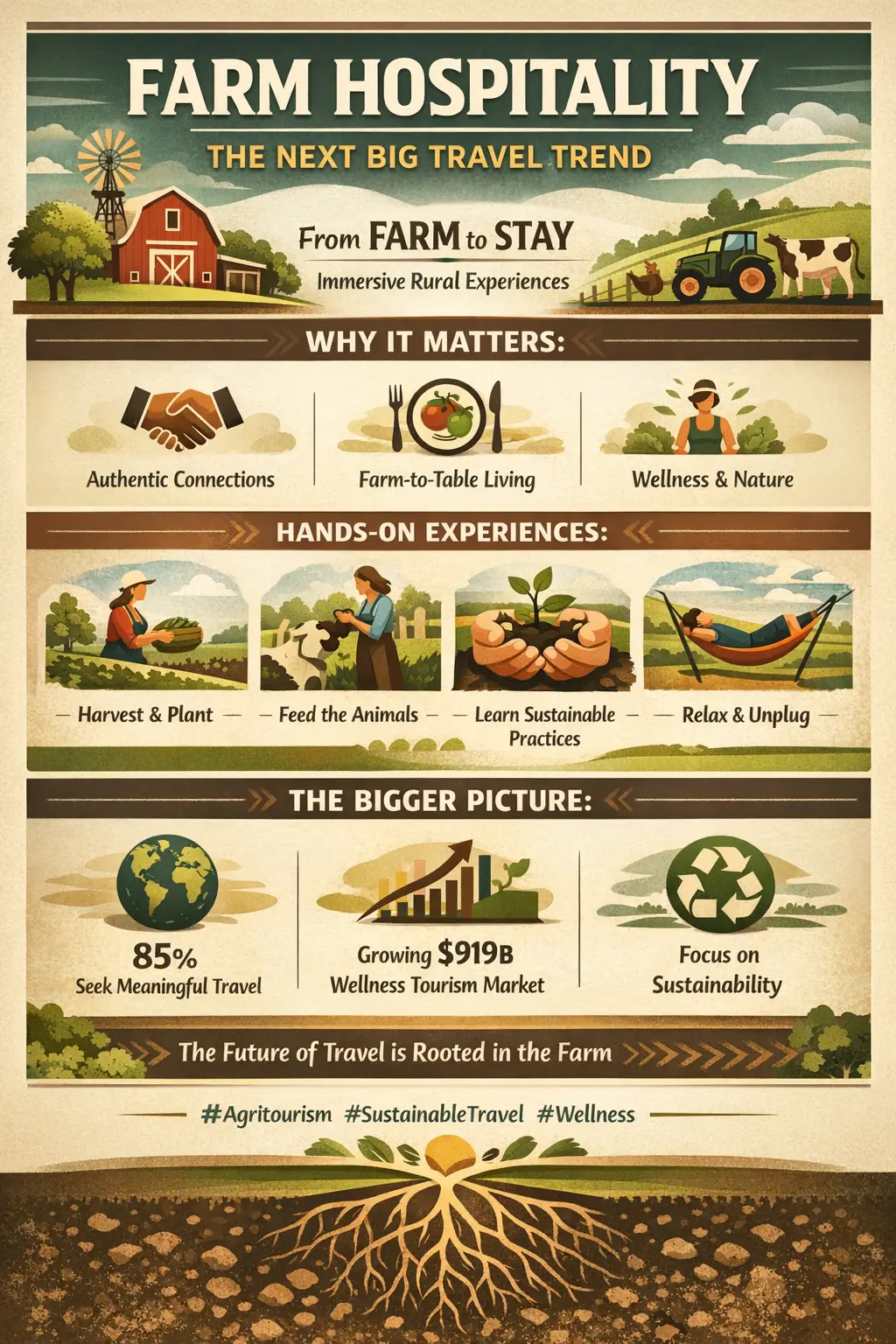
Travelers are moving away from traditional hotels and resorts toward a new type of stay that connects them directly with working farms, local food systems, and rural communities. Farm hospitality is a growing travel trend where guests stay on working farms and participate in agricultural activities, enjoy farm-to-table meals, and experience sustainable living practices firsthand. The wellness travel market is expected to reach $978 billion in 2025, and farm stays are becoming a significant part of this growth.
This shift reflects your desire for authentic experiences that go beyond sightseeing. You want to understand where your food comes from, learn sustainable practices, and spend time in natural settings that reduce stress and improve well-being. Farm hotels and retreats offer hands-on involvement with planting, harvesting, animal care, and cooking with ingredients picked fresh from the land.
The appeal goes deeper than a simple vacation. You gain practical knowledge about agriculture, connect with local communities, and return home with skills and inspiration to live more sustainably. Understanding what farm hospitality offers, how it works, and where this trend is heading will help you decide if this type of travel matches what you’re looking for in your next trip.
Understanding the Farm Hospitality Trend
Farm hospitality represents a shift in how travelers connect with rural landscapes through stays that blend accommodation with working farm environments. This movement builds on agritourism roots while incorporating modern design sensibilities and regenerative agriculture practices.
Definition and Origins
Farm hospitality refers to lodging experiences on active agricultural properties where guests stay overnight and engage with farm life. Unlike day-visit agritourism, you sleep on the property and participate in daily farming activities.
The concept evolved from European farmstays where families opened spare rooms to travelers seeking rural getaways. These early models focused on simple accommodations and home-cooked meals. Today’s farm hospitality maintains that authentic connection but adds thoughtful design and wellness programming.
Regenerative farming practices now shape many farm stays where land stewardship merges with hospitality. You’ll find properties that teach sustainable agriculture methods while providing comfortable places to rest. The experience goes beyond seeing animals and crops to understanding how food production impacts the environment.
Evolution From Traditional Agritourism
Traditional agritourism centered on educational farm tours, pick-your-own fruit stands, and corn mazes. You visited for a few hours then left.
Farm hospitality transformed this model by making the farm your destination for multiple nights. The agritourism market now includes properties with premium accommodations that rival boutique hotels. Guests want hands-on experiences like feeding livestock, harvesting vegetables, and learning cheese-making.
The quality of lodging has improved significantly. Many farms now offer luxury cabins, renovated barns, or purpose-built guest houses with modern amenities. You get experiential travel without sacrificing comfort.
Key Drivers of Farm Hospitality
Several factors fuel this trend’s growth. The wellness tourism market is forecast to reach $978 billion by 2025, with travelers seeking nature-based experiences for mental health benefits.
Main drivers include:
- Authenticity demand: You want genuine connections to food sources and rural culture
- Digital detox appeal: Farm environments offer relief from screen-heavy urban life
- Sustainability values: Eco-conscious travelers support regenerative agriculture
- Community connection: Shared meals and group activities reduce isolation
Time outdoors reduces stress and lowers cortisol levels according to wellness research. Farm activities like planting and animal care provide mindfulness opportunities that standard hotels cannot match.
Types of Farm Hospitality Experiences
Farm hospitality offers several distinct accommodation styles that cater to different traveler preferences and budgets. Each type provides unique opportunities to connect with rural life while offering varying levels of comfort and amenities.
Farm Stays and Farm Hotels
Farm stays typically place you directly on working farms where you can participate in daily agricultural activities. You might collect eggs, feed animals, or help with harvesting while staying in guest rooms within the farmhouse or separate cottages on the property.
Farm hotels represent a more structured hospitality approach. These properties combine hotel-style services with agricultural settings. You’ll find consistent amenities like private bathrooms, daily housekeeping, and on-site dining.
Many farm hotels feature farm-to-table dining experiences where meals come from ingredients grown or raised on the property. Some offer cooking classes, vineyard tours, or workshops in cheese-making and beekeeping.
The main difference between farm stays and farm hotels lies in the level of service and guest involvement. Farm stays encourage hands-on participation in farm work, while farm hotels provide a more traditional lodging experience with agricultural elements as attractions rather than active responsibilities.
Farm Resorts and Retreats
Farm resorts offer expanded amenities beyond basic accommodations. You’ll find spa services, fitness centers, multiple dining venues, and organized activities across larger properties.
Wellness retreats on farms combine agricultural settings with health-focused programming. These include yoga sessions, meditation workshops, and therapeutic treatments. Many incorporate organic farm cuisine and outdoor activities like mindful hiking.
Some farm resorts focus on specific themes:
- Culinary retreats featuring chef-led cooking classes and wine pairings
- Educational programs teaching sustainable farming and regenerative agriculture practices
- Corporate retreats offering team-building activities in natural settings
- Family-focused resorts with children’s programs and animal interactions
Farm resorts typically accommodate larger groups and provide more structured schedules than basic farm stays. You can expect professional staff, planned activities, and resort-level pricing.
Glamping and Unique Accommodations
Glamping combines outdoor camping with luxury amenities. You sleep in safari tents, yurts, treehouses, or converted barns equipped with comfortable beds, electricity, and sometimes private bathrooms.
These accommodations let you experience nature without sacrificing comfort. Many feature large windows for views, heating and cooling systems, and stylish furnishings.
Popular glamping options on farms include:
- Safari-style tents with king beds and en-suite facilities
- Yurts offering circular living spaces with wood-burning stoves
- Treehouses built among orchards or woodland areas
- Converted barns maintaining rustic charm with modern updates
Glamping appeals to travelers who want outdoor experiences but prefer not to deal with traditional camping challenges. You get proximity to farm activities while enjoying hotel-level comfort in distinctive settings.
Popular Activities and Immersion Opportunities
Farm hospitality offers guests direct participation in agricultural life through hands-on experiences and educational programs. Visitors can engage with sustainable farming practices, learn culinary skills using fresh ingredients, and explore working farms through guided tours both in person and online.
Farm Tours and Vineyard Visits
Farm tours let you see how food gets from soil to table. You walk through fields, orchards, and animal pastures while learning about planting cycles and harvesting methods. Many farms focus on organic and regenerative practices that improve soil health and reduce environmental impact.
Vineyard tours take you through grape-growing regions where you taste wines and learn about fermentation processes. You see how climate and soil affect flavor profiles. Some vineyards combine tastings with food pairings using produce from their own gardens.
These agritourism activities give you direct access to farmers who explain their daily work and challenges. You might collect eggs, feed animals, or observe milking sessions. Tours often include seasonal activities like apple picking or lavender harvesting based on what’s ready.
Cooking Classes and Culinary Workshops
Cooking classes at farm stays use ingredients harvested that same day. You prepare meals under guidance from chefs who specialize in farm-to-table cuisine. Classes teach techniques for seasonal cooking and preserving methods like canning and pickling.
Workshops often focus on specific skills such as bread baking, cheese making, or pasta rolling. You learn to identify herbs and vegetables in the garden before using them in recipes. Some programs include fermentation classes for kombucha, sauerkraut, or kimchi.
These culinary experiences connect you to where your food comes from. You gain practical skills you can use at home while understanding the work behind each ingredient.
Hands-On Sustainable Farming
You participate directly in farming tasks when you choose hands-on agricultural programs. This includes planting seeds, weeding gardens, composting, and caring for livestock. Agricultural immersion helps you understand organic and regenerative methods that restore soil and support biodiversity.
Many farms teach water conservation techniques and natural pest control. You learn how crop rotation maintains soil nutrients and reduces disease. Animal care sessions let you feed chickens, brush goats, or help with basic veterinary checks.
These activities provide mindfulness benefits as you work with natural cycles and seasonal rhythms. You see immediate results from your efforts and gain appreciation for the physical labor involved in food production.
Virtual Farm Tours
Virtual farm tours bring the farm experience to your home through live video streams and recorded content. You watch farmers demonstrate daily tasks and answer questions in real time. These digital experiences show planting techniques, animal care routines, and harvest processes.
Some farms offer virtual tours as educational programs for schools and groups. You see behind-the-scenes operations not always accessible during in-person visits. Virtual options work well for people with mobility limitations or those researching farms before booking a stay.
Interactive elements let you request specific views or ask about particular farming methods. You gain knowledge about agriculture without travel costs or time commitments.
Farm-to-Table and Culinary Offerings
Farm hospitality venues are transforming how guests experience food by connecting them directly to the source of their meals. Fresh ingredients from nearby farms create memorable dining experiences while supporting sustainable agriculture and local economies.
Farm-to-Table Dining
Farm-to-table dining connects you directly with food grown on-site or from nearby farms. When you eat at these venues, your meal often includes ingredients harvested that same day. This means better flavor and higher nutritional value compared to food that travels long distances.
Many farm hospitality properties grow their own vegetables, herbs, and fruits in on-site gardens. Some raise livestock or partner with neighboring farms to source meat and dairy products. You can often see where your food comes from by taking a walk around the property before your meal.
The menu at farm-to-table restaurants changes based on what’s available each season. In summer, you might enjoy fresh tomatoes and zucchini. Winter menus feature root vegetables and preserved items. This approach reduces food waste and ensures you’re eating food at its peak quality.
Local and Organic Food Initiatives
Local food sourcing helps farm hospitality venues build relationships with producers in their region. You benefit from knowing exactly where your food originates and how it was grown. Many properties source ingredients within a 50-mile radius to minimize transportation and support nearby farms.
Organic farming practices eliminate synthetic pesticides and fertilizers. When you choose accommodations with organic food programs, you’re eating cleaner food while supporting better soil health. These venues often display certifications or provide information about their farming methods.
Some properties take transparency further by offering detailed information about each ingredient on your plate. You might find the farmer’s name, the distance from farm to kitchen, and growing methods listed on the menu. This level of detail helps you make informed choices about what you eat.
Seasonal Events and Food Festivals
Farm hospitality venues host harvest dinners, cooking classes, and food festivals throughout the year. You can participate in grape stomping during fall harvest season or attend strawberry picking events in spring. These activities let you engage with food production in hands-on ways.
Farm dinners bring you outdoors to eat among the crops and animals. Long tables set up in fields or orchards create unique dining settings. Chefs prepare multi-course meals featuring ingredients grown steps away from your table.
Cooking workshops teach you how to prepare dishes using seasonal ingredients. You learn preservation techniques like canning and pickling to extend the harvest. Many venues also host farmers markets where you can purchase products directly from local growers to take home.
Sustainability and Regenerative Practices
Farm hospitality properties are implementing concrete environmental practices that go beyond traditional conservation. These initiatives focus on restoring soil health, reducing waste, and creating self-sufficient energy systems that benefit both the land and guests.
Sustainable Farming in Hospitality
Farm hotels integrate sustainable farming methods directly into their daily operations. You’ll find properties using crop rotation, natural pest control, and water conservation techniques to maintain their agricultural spaces. These farms avoid synthetic pesticides and fertilizers, instead relying on natural compost and beneficial insects.
Many properties measure their environmental impact through specific metrics. They track water usage per guest, monitor soil health through regular testing, and document wildlife populations on their land. Some estates maintain heritage seed banks and grow heirloom varieties that preserve genetic diversity.
The restaurants embracing regenerative agriculture movement has influenced farm hotels to adopt similar sourcing standards. You can participate in harvest activities, learn about permaculture design, and see how properties manage their ecosystems without depleting resources.
Regenerative Agriculture Initiatives
Regenerative agriculture actively improves the land rather than simply maintaining it. This approach focuses on building soil organic matter, increasing biodiversity, and enhancing water cycles. Properties practicing regenerative methods use cover crops, minimal tillage, and integrated livestock management.
Regenerative farming as a wellness trend has gained momentum because it addresses climate concerns while producing high-quality food. The soil becomes richer each season, capturing carbon from the atmosphere and storing it underground. You might observe rotational grazing systems where animals move across pastures, allowing vegetation to recover and thrive.
Biodynamic farming represents one form of regenerative practice. This method treats the farm as a living organism, using lunar cycles and specialized preparations to enhance soil vitality. Properties document improvements in soil carbon levels, increased earthworm populations, and enhanced nutrient density in their crops.
Renewable Energy and Composting
Farm hotels reduce their environmental footprint through renewable energy installations and comprehensive waste management. Solar panels, wind turbines, and geothermal systems power operations at many properties. Some estates achieve energy independence or feed excess power back to local grids.
Composting programs turn food scraps, garden waste, and natural materials into nutrient-rich soil amendments. You’ll see dedicated composting areas where organic matter breaks down through aerobic decomposition. Properties often use multi-bin systems that process different waste streams at various stages.
Some estates implement:
- Biogas digesters that convert food waste into cooking fuel
- Greywater systems that recycle water from sinks and showers for irrigation
- Rainwater harvesting infrastructure that reduces municipal water dependence
- Electric vehicle charging stations powered by on-site renewable sources
These systems create closed-loop operations where waste becomes a resource rather than a problem.
Market Trends, Challenges, and Opportunities
The agritourism sector is experiencing steady expansion driven by consumer demand for authentic rural experiences and sustainable travel options. Regional variations in development create distinct opportunities, while new booking technologies help farms reach broader audiences.
Growth of the Agritourism Market
The agritourism market is experiencing consistent growth as travelers increasingly prioritize experiential activities over traditional vacations. You’ll find that consumers now seek hands-on agricultural experiences that connect them with food production and rural lifestyles.
This growth stems from several key factors. More people want to understand where their food comes from. They’re drawn to educational opportunities that traditional hotels can’t provide.
Luxury agritourism experiences are emerging as a distinct segment within the market. These upscale offerings combine rural authenticity with premium amenities. You can now find properties that offer both farm activities and high-end accommodations that appeal to affluent travelers.
The trend toward sustainable travel also fuels market expansion. Guests actively choose destinations that demonstrate environmental responsibility and support local economies. Farm stays naturally align with these values by showcasing agricultural practices and offering locally sourced food experiences.
Regional Hotspots and Global Perspectives
Different regions are developing agritourism at varying rates based on their agricultural heritage and tourism infrastructure. You’ll notice that areas with strong farming traditions often lead in creating successful farm hospitality ventures.
North America shows particularly strong growth in wine country regions and areas with established organic farming communities. European destinations continue to attract visitors with centuries-old agricultural practices and well-developed rural tourism networks.
Rural investment strategies are evolving to support this growth. Qualified Rural Opportunity Funds and micro-resorts represent new approaches to financing farm hospitality projects in underserved areas. These financial tools help you access capital for developing rural properties that might otherwise struggle to attract traditional investment.
Asia-Pacific markets are experiencing rapid expansion as domestic tourism grows and urban populations seek countryside escapes. Latin American destinations offer unique agricultural experiences centered on coffee, cacao, and traditional farming methods.
Infrastructure and Booking Innovations
Technology is transforming how you can manage and market your farm hospitality business. Online booking platforms now make it easier for guests to discover and reserve farm stays without relying solely on word-of-mouth referrals.
You need robust digital infrastructure to compete effectively. This includes user-friendly websites, secure payment processing, and integrated reservation systems. Many farms struggle with these technical requirements despite having excellent on-site experiences to offer.
Mobile-first booking experiences are becoming essential as travelers increasingly research and book trips from smartphones. Your property must adapt to this shift or risk losing potential guests to more tech-savvy competitors.
Property management systems designed specifically for agritourism help you handle unique challenges like seasonal variations, activity scheduling, and inventory management for both accommodations and farm experiences. These tools streamline operations and reduce administrative burden.
The hospitality industry faces common challenges including labor costs and regulatory compliance that also affect farm stays. Investing in appropriate technology helps you address these obstacles while maintaining the authentic experience guests expect from rural accommodations.
The Future of Farm Hospitality
Farm hospitality is positioned to become a major segment of the travel industry as wellness priorities shift and rural areas adapt to meet growing demand. The transformation will reshape how properties operate and how communities benefit from agricultural tourism.
Integration With Wellness Tourism
Farm hospitality aligns perfectly with the booming wellness tourism sector, which is projected to reach $1.35 trillion by 2028. When you visit a farm hotel, you get access to experiences that address multiple wellness needs at once.
Research shows that spending just 10 minutes outdoors can lower your cortisol levels and blood pressure. The natural beauty of farm landscapes amplifies these effects by calming your nervous system.
You’ll find that modern farm stays offer more than basic accommodations. They combine award-winning spas, Michelin-starred restaurants, and elegant design with direct access to working farms. This matches what wellness travelers want most: 79% seek outdoor immersion, 75% prioritize healthy cuisine, and 60% demand tranquility.
The appeal goes beyond physical health. Farm stays help you reconnect with nature in ways that restore you on a cellular and hormonal level. You participate in hands-on activities like harvesting vegetables, meeting farm animals, and learning about regenerative agriculture practices that give your stay deeper meaning.
Shifting Guest Expectations
Your expectations for farm hospitality have evolved significantly from basic bed-and-breakfast experiences. You now want sophisticated services that combine luxury with authentic agricultural experiences.
Properties are responding by offering immersive programs where you can walk through greenhouses, chat with gardeners, and trace ingredients from soil to plate. You’re no longer satisfied with observing farm life from a distance. You want to participate in meaningful ways.
The agritourism market reflects this shift, growing 12% yearly and expected to reach $14.5 billion by 2029. You’re driving this growth by seeking experiences that feel real and purposeful rather than manufactured.
You also expect transparency about farming practices. Properties that practice biodynamic or regenerative agriculture give you workshops where you learn to grow, harvest, and cook with ingredients cultivated on-site. This hands-on education satisfies your desire for connection and knowledge in a screen-saturated world.
Long-Term Impact on Rural Communities
Farm hospitality creates economic opportunities that help rural areas thrive without compromising their agricultural character. When properties blend farming with tourism, they generate year-round employment and support local food systems.
You benefit from staying at places where profits reinvest in land stewardship and community preservation. Historic properties get restored, traditional farming methods get revived, and local artisans find new markets for their crafts.
The model also supports agricultural viability. Farms that add hospitality components can maintain their land in active production while earning income that traditional farming alone might not provide. This keeps rural landscapes productive rather than allowing them to become suburban developments.
Your visits create demand for local products and services beyond the farm property itself. Nearby restaurants, craft producers, and tour operators all benefit when farm hotels attract visitors to rural regions. This distributed economic impact strengthens entire communities rather than concentrating benefits in a single location.
Frequently Asked Questions
Farm hospitality requires careful planning around guest safety, authentic experiences, and sustainable operations. Understanding these core elements helps both travelers choose the right destination and farm owners create successful businesses.
What are the key characteristics of successful farmstay experiences?
Successful farmstay experiences balance comfort with authentic agricultural activities. You need comfortable accommodations that allow guests to relax while still feeling connected to the farm environment.
Direct interaction with farm operations sets great farmstays apart. Guests want to participate in real activities like harvesting vegetables, feeding animals, or learning traditional farming skills from knowledgeable hosts.
Safety measures are essential for any farm welcoming visitors. You should follow all guidelines provided by farm staff to ensure your visit remains both enjoyable and secure.
The best farmstays create educational value alongside entertainment. You gain knowledge about where your food comes from and how sustainable agriculture works through hands-on participation.
How has agritourism evolved in the past decade?
Agritourism has transformed into one of the fastest growing sectors in the travel industry. More travelers now seek immersive experiences that connect them with nature and local cultures rather than traditional resort vacations.
Luxury has entered the farm hospitality space through glamping accommodations. You can now enjoy the outdoor farm experience with amenities like comfortable beds, private bathrooms, and stylish furnishings instead of roughing it in basic camping conditions.
Wellness tourism has merged with farm experiences over the past decade. Travelers increasingly ask questions around work and wellness and find their answers through farm-based retreats.
Farm-to-table dining has become central rather than optional for agritourism businesses. You expect meals prepared with ingredients grown on the property you’re visiting, reflecting seasonal availability and local agricultural traditions.
What are the best practices for integrating technology into farm hospitality?
You need online booking systems that make reservations simple and transparent. Digital platforms help you check availability, view accommodations, and secure your spot without phone calls or email chains.
Social media showcases farm experiences through photos and videos that attract potential guests. Farms should share daily activities, seasonal changes, and guest experiences to build interest and trust with your target audience.
Joining networks like FarmStay USA gives smaller operations marketing power they couldn’t achieve alone. These platforms connect you with verified farmstays while helping farm owners reach broader audiences.
Guest management software helps farms track preferences, dietary restrictions, and special requests. You receive better personalized service when farms use technology to remember your needs and communicate effectively.
Safety documentation and biosecurity protocols benefit from digital systems. Farms can share important information with you before arrival and maintain records that protect both guests and agricultural operations.
How do local food movements impact farm-based hospitality businesses?
The farm-to-table movement provides a sustainable solution that bridges the gap between fresh quality ingredients and consumers. You benefit from knowing exactly where your food comes from and how it was grown.
Local food priorities have made farm hospitality more competitive and attractive. Guests now expect organic seasonal menus that highlight produce grown on the property rather than generic imported ingredients.
Farm-to-table restaurants are thriving by sourcing ingredients directly from local farms. This trend extends naturally to farm accommodations where you eat meals made from vegetables harvested that same day.
Health-conscious travelers choose farm stays specifically for access to fresh organic food. You can participate in harvesting your own ingredients and learn about nutritional value through cooking classes focused on whole-food diets.
The local food movement creates additional revenue streams for farm hospitality businesses. You might attend farm dinners with celebrity chefs, seasonal food festivals, or wine and cheese pairings that showcase regional agricultural products.
What are the potential benefits of farm hospitality for rural communities?
Farm hospitality creates new income sources for agricultural properties beyond traditional crop or livestock sales. You support rural families who might otherwise struggle with volatile commodity prices or seasonal uncertainties.
Tourism brings jobs to rural areas where employment options are often limited. Local residents find work as farm guides, hospitality staff, cooking instructors, or maintenance workers at agritourism operations.
Farm stays encourage preservation of agricultural land and traditional farming practices. When farms generate steady tourism revenue, you help prevent the conversion of farmland into suburban development.
Community connections strengthen when visitors engage with local culture and products. You might purchase artisan goods, attend local events, or return home as an advocate for rural communities you visited.
Educational benefits extend beyond individual guests to broader society. Farm hospitality teaches you and other visitors about food production, environmental stewardship, and the challenges facing modern agriculture.
How can farm hospitality businesses ensure sustainability and eco-friendliness?
Green certifications like Green Key or LEED demonstrate your farm’s commitment to environmental responsibility. These labels help you identify businesses that genuinely reduce their environmental impact rather than just claiming to be eco-friendly.
Sustainable building materials like reclaimed wood, bamboo, or locally sourced stone reduce environmental footprints while adding character to accommodations. Energy-efficient designs with passive solar heating or natural insulation minimize heating and cooling costs.
Renewable energy systems including solar panels, wind turbines, and bioenergy help farms reduce dependency on fossil fuels. You benefit from lower electricity costs at properties that invest in these clean energy sources.
Water conservation techniques protect critical agricultural resources. Low-flow faucets, greywater systems, and drought-tolerant landscaping reduce consumption while rainwater harvesting systems water crops without depleting municipal supplies.
Composting programs turn organic waste into valuable fertilizer for farm crops. You participate in zero-waste policies when farms recycle materials, use eco-friendly packaging for guest amenities, and educate visitors about waste reduction benefits.